



RBCB3TQuote onlyPrimary Cells
Rabbit CBMC Pan CD3+ T cells
- Rabbit
- T-Cell
Priced per project
Request a quote- Shipped on dry ice overnight within the US, 2-day international
- CoA per lot on request
- Performance guarantee replaced free if cells fail to attach
For research use only. Not for use in diagnostic or therapeutic procedures.
- SpeciesRabbit
- Cell typeT-Cell
- ModelNormalUnmodified
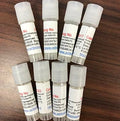
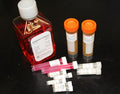
- FormatFrozen Vial(1 x 10⁶ cells)
Description
Catalog No. RBCB3T
Cord blood CD3+ pan-T cellsProduct Description:
Cord blood CD3+ pan-T cells are mature T lymphocytes isolated from umbilical cord blood by selection for the CD3 component of the T-cell receptor complex. The population includes CD4+ and CD8+ alpha-beta T cells together with smaller numbers of gamma-delta T cells and other unconventional T-cell subsets. In uncomplicated term cord blood, the conventional T-cell compartment is strongly enriched for antigen-inexperienced cells and generally contains fewer differentiated memory and effector cells than adult peripheral blood. These cells can respond to T-cell receptor and costimulatory signals, proliferate, produce cytokines, and differentiate into specialized effector or regulatory states under appropriate conditions. Donor characteristics, collection and processing, enrichment method, cryopreservation, and culture conditions can affect subset distribution and function. Primary cord blood pan-T cells provide a developmentally distinct model for examining T-cell activation, differentiation, tolerance, and early-life immune regulation; purity, CD4/CD8 composition, viability, and baseline activation should be confirmed for each experiment.
Suggested applications:
Primary cord blood CD3+ pan-T cells support mechanistic and translational studies of early-life T-cell biology:
T-Cell Activation: Measure receptor-proximal signaling, costimulatory requirements, activation-marker expression, proliferation, and cytokine production after defined stimulation.
Subset and Developmental Profiling: Compare CD4+, CD8+, conventional, and unconventional T-cell subsets using multiparameter phenotyping or single-cell analysis.
Effector and Regulatory Differentiation: Examine polarization toward helper, cytotoxic, memory-like, or regulatory states under controlled cytokine conditions.
Tolerance and Alloreactivity: Investigate activation thresholds, anergy, suppression, mixed-lymphocyte responses, and mechanisms that regulate neonatal immune reactivity.
Immunotherapy and Vaccine Research: Evaluate engineered receptors, gene editing, immune agonists, checkpoint pathways, vaccine antigens, and adjuvants in a neonatal T-cell model.
Storage
When supplied cryopreserved, cells are shipped on dry ice and should be transferred to liquid nitrogen (-180°C) immediately upon arrival until ready for use. Live-cell shipments should be processed promptly according to the product-specific protocol. Do not store primary cells in a -20°C or -80°C freezer. Cell recovery, phenotype, and function may depend on shipment format, thawing procedure, resting conditions, and subsequent culture parameters.
Authorized Uses of Cell Biologics' Products
Cord Blood CD3+ Pan-T Cells from Cell Biologics are distributed for research purposes only. These products are not authorized for human use or for in vitro diagnostic or therapeutic procedures. Transfer or resale of Cell Biologics cells or products to other markets, organizations, or individuals is prohibited without the company's written consent. Cell Biologics' Terms and Conditions must be accepted before an order is submitted.
Disclaimer
Investigators should handle the cells with caution and treat all human-derived cells as potential biohazards, since no testing procedure can completely guarantee the absence of infectious agents.
Warranty and Liability
Cell Biologics' guarantee applies only to Cell Biologics cells used with the recommended Cell Biologics media and coating solution, following applicable online protocols and the current Terms and Conditions.
Culture protocol in four steps
- 1Thaw37 °C water bath, under 2 minutes. Never re-freeze a thawed vial.
- 2PlateSeed into a flask pre-coated with Cell Biologics coating solution, in the matched complete medium.
- 3FeedChange medium every 2–3 days until the culture is 80–90 % confluent.
- 4PassageSplit 1:2 with Cell Biologics trypsin; expand for 3–5 passages.
Specification sheet
Source
| Species | Rabbit |
|---|---|
| Cell type | T-Cell |
| Modification | Unmodified |
Format & QC
| Format | Frozen Vial (1 x 10⁶ cells) |
|---|---|
| Storage | Liquid nitrogen on arrival |
| Shipping | Dry ice, overnight (US) |
Need something custom?
Different species, strain, modification or format? Our scientists isolate and engineer cells to order.
